
-
-
Products

-
-
-
-

Detailed
What are the components of an LED display kit?
Time:
2022-02-24 17:47
Author:
Web scraping
LED displays, owing to their low cost, high brightness, long lifespan, and excellent visual performance, have increasingly found widespread applications across diverse sectors, including transportation systems, advertising, sports venues, and the financial‑securities industry. Next, let’s take a look at the components that make up an LED display system.
LED displays, owing to their low cost, high brightness, long lifespan, and excellent visual performance, have increasingly found widespread applications across diverse sectors, including transportation systems, advertising, sports venues, and the financial‑securities industry. Next, let’s take a look at the components that make up an LED display system.
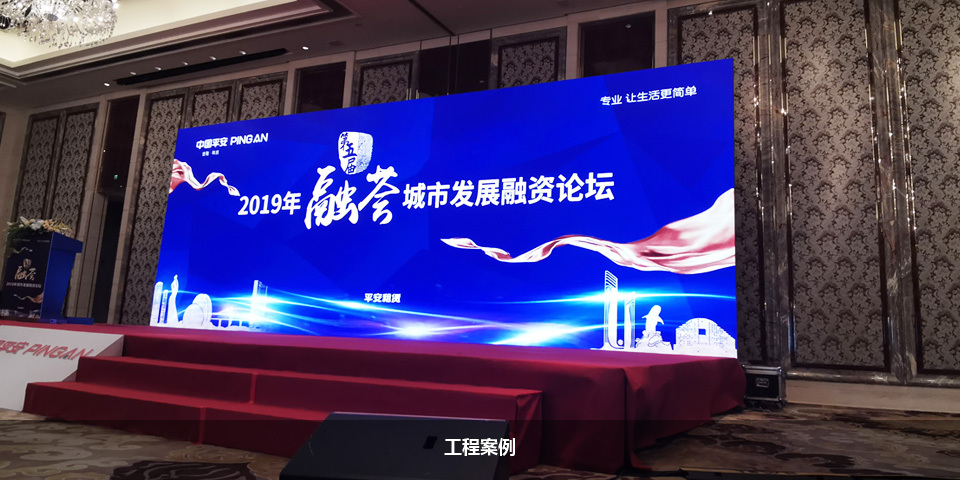
1. The power supply sector has also benefited from the rapid growth of the LED display industry, leading to increased sales. The stability and performance of power supplies directly determine the overall performance of LED displays, and selecting the right model requires careful consideration. The required power rating is calculated based on the power consumption of the module board, with specific requirements varying across different models.
2. Cabinet: Depending on the size, a single cabinet is composed of multiple module panels, and several cabinets are assembled to form an LED display screen. Cabinets are manufactured professionally, available in standard and waterproof versions. With the rapid growth of the LED industry, manufacturers of full-color LED display cabinets now see nearly monthly order volumes that are fully booked, driving robust expansion in the cabinet‑manufacturing sector.
3. Module: An LED module consists of a housing, a base shell, a front cover, and other components. The LED display panel is assembled from LED modules, which together form the large LED screen we see today.
4. Control System: The control system is a critical component of an LED display. Video signals are transmitted via the sender card and the display card to the receiver card on the LED panel, which then segments and forwards the signals to the HUB board. Each receiver card is equipped with a breakout board; it sends the data to this breakout board, which in turn relays the data through ribbon cables to the individual row‑ or column‑specific LED modules within the LED display cabinet. Additionally, data is routed between LED modules using flat ribbon cables. Typically, a single breakout board has only eight connectors, meaning it can manage data transmission for just eight rows or eight columns of LED modules.
If there are additional rows or columns, an adapter board can be added to the receiving card. Since indoor and outdoor displays differ in pixel configuration and scanning methods, the receiving cards also vary accordingly.
LED display panel manufacturers state that LED displays are currently undergoing rapid growth and expansion. Today, the market has undergone significant changes. Beyond traditional functions such as information display, aesthetic requirements have become increasingly stringent, enabling these displays to better integrate with the overall architectural context and meet diverse application needs—leading to the development of custom‑shaped LED displays.
An LED display is a custom-shaped LED screen based on the standard LED panel, differing from conventional rectangular or planar forms. Its shapes vary widely, including arcs, curved surfaces, quadrilateral hexahedrons, letters, and other irregular configurations.
The emergence of irregular‑shaped modules has endowed LED irregular‑shaped displays with enhanced design flexibility. For a long period previously, such displays were typically assembled from conventional rectangular flat panels or achieved through edge‑wrapping techniques. Common examples of LED irregular‑shaped screens include highly curved arc‑shaped displays and planar circular screens.
Related News
How can LED display panel manufacturers achieve closed-loop innovation?
Products are the foundation of an enterprise, and innovation is the soul of those products. As the LED display‑module industry continues to evolve, manufacturers are increasingly recognizing the critical importance of innovation. With numerous avenues for innovation at their disposal, how can companies build a closed-loop ecosystem that unlocks new opportunities and enables sustainable, long-term growth?
Which domestic suppliers are well-known for LED digit modules?
When choosing a digital tube kit, users naturally turn to suppliers, as this often results in significantly lower prices, helping consumers save considerably. So, which well-known digital tube kit suppliers are available in China? This is a question that frequently comes up online. To help you identify reliable manufacturers, we’ll walk you through the options below.